
Blog
Best Cooking Oil for Heart Patients in India – Health Guide
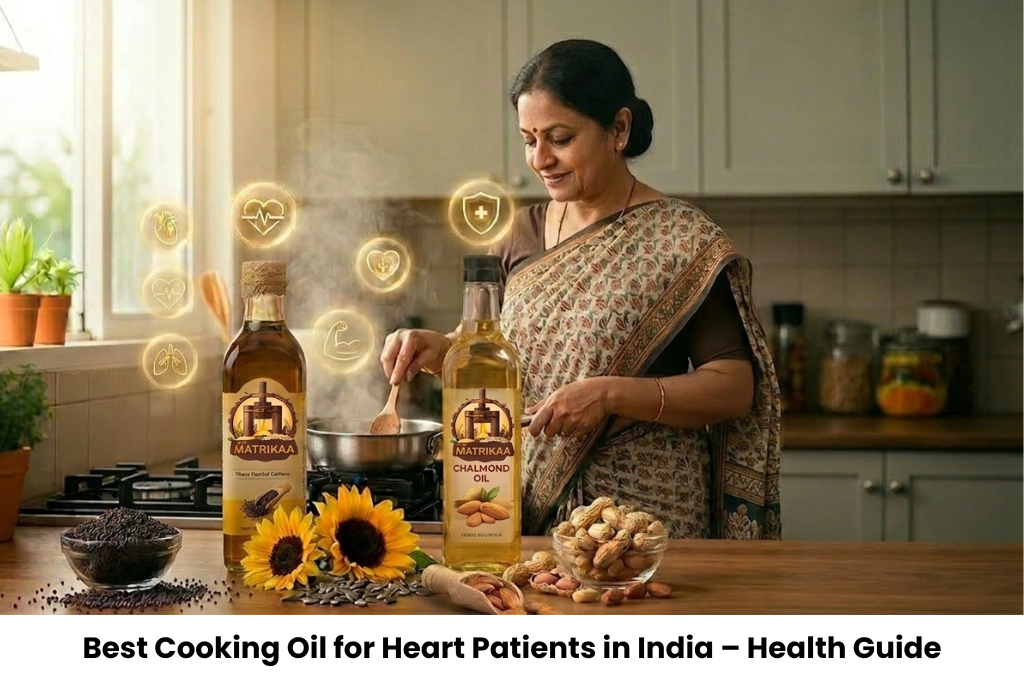
Heart disease is now leading as a cause of death in India. It is such a fact that the lives of millions of Indian families have to contend with every day; it is not a fear ploy. Cooking oil, which you use three times a day, 365 days a year, for decades of your life, is a subject that slumbers in the midst of all the talk about exercise, stress, and medicine.
When the improper oil is used regularly over a long period of time, it can seriously harm your arteries, blood pressure, cholesterol, and heart health. The right oil, on the contrary, can proactively protect your cardiovascular system and put a little burden on the heart on a daily basis. The article is aimed at all people who wish to know the most suitable cooking oil to use by heart patients in such a simple way. It does not have any complicated science and beau-esprit, it is simply practical information.
The Connection Between Cooking Oil and Heart Health That Nobody Talks About Enough
Most heart patients in India are told to eat less oil. That advice is partly right, but it misses something important: it is not just how much oil you eat, it is which oil you eat that truly matters.
Every cooking oil is made up of different types of fats. Some of those fats protect your heart. Others slowly harm it. Protective fats that prevent your arteries from becoming hard and stiff, reduce inflammation, boost your HDL, and reduce LDL include monounsaturated fats and omega-3 fatty acids. The same of the bad fats, including the trans fats and high saturated fats. Throughout the years, they increase LDL, raise the viscosity of blood, constrict the arteries, and create the interior milieu, which predisposes to heart attacks and strokes.
The traditional cold-pressed oils our grandparents used have quietly been replaced in India by industrially processed oils, which are less nutritious, more affordable, and last longer. Over the course of forty years, hundreds of millions of homes have experienced this change, which has directly led to the current rise in heart disease. Understanding which oil is good for heart health is not just a lifestyle choice. For millions of Indians, it is a matter of real, long-term survival.
What You Should Actually Look for on That Oil Bottle
Walk into any Indian grocery store and you will find fifty different oils making fifty different claims. “Heart healthy.” “Cholesterol-free.” “Light.” “Fortified.” It is almost impossible to know what to believe. So here are a few things that actually matter, explained simply.
- Fat composition is everything. Look for oils that are naturally high in monounsaturated fatty acids (MUFA) and polyunsaturated fatty acids (PUFA), particularly omega-3s. These are the fats your heart genuinely benefits from. Oils high in saturated fat should be used sparingly, and anything with trans fats should be avoided completely.
- The processing method tells you more than the label does. An oil labelled “sunflower oil” or “rice bran oil” tells you very little about whether it is actually good for you. What matters is how that oil was made. Industrially refined oils go through bleaching and deodorising, in addition to chemical solvent extraction. By the time the oil reaches your bottle, most of its natural nutrients are gone. Cold-pressed along with wood-pressed oil, extracted at room temperature without chemicals, keeps its original nutritional value intact.
- Smoke point matters for how you cook. Heat applied to oil past its smoke point causes disintegration of the oil and the release of harmful substances. One of the best cooking oils for a heart patient with diabetes is one that can be used in accordance with the type of cooking you do: high smoke point frying, low smoke point drizzling or light sauteing.
- Freshness over shelf life. Refining in the industrial process prolongs the shelf life by a very long time yet the long shelf life can be at the expense of the same nutrients that you are purchasing the oil. Cold-pressed oils have a decreased shelf life, which is a good thing in fact, because they are pure and untouched.
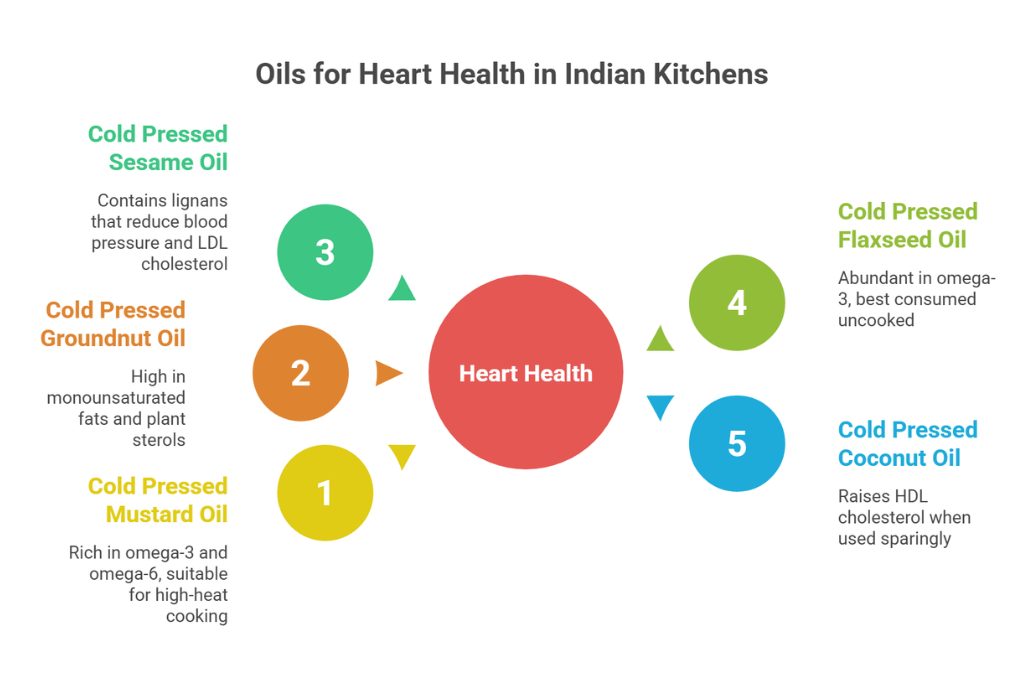
The Best Oil for Heart Health: Five Oils Indian Kitchens Should Know
Five traditional, locally available oils stand out for cardiovascular protection in Indian cooking.
- Cold-pressed mustard oil has the best ratio of omega-3 to omega-6 and also its smoke point is quite high that it is applicable in daily Indian cooking, especially in the North.
- Cold-pressed groundnut oil is an excellent source of monounsaturated fats and plant sterols (which prevent the absorption of cholesterol), making it a good option for cholesterol-conscious cooks.
- The Cold Pressed Sesame Oil is the only oil that has special lignans (sesamin and sesamolin), which reduce blood pressure and LDL cholesterol and a millennium years of use in Indian kitchens support its advantages.
- Cold-pressed flaxseed oil is the most abundant plant-based source of omega-3 and should be consumed uncooked as a drizzle over cooked food.
- Cold-pressed coconut oil, while high in saturated fat, raises good (HDL) cholesterol when used sparingly, especially in traditional South Indian cooking.

Oils That Heart Patients Should Remove From Their Kitchen Right Now
This section might be uncomfortable because some of these oils are probably in your kitchen at this very moment.
Three categories of oils pose serious cardiovascular risks and deserve removal from heart-conscious kitchens.
- Refined vegetable oils- such as generic vegetable, soybean and corn oils- contain omega-6 fatty acids in dangerously high amounts. The ratio of omega-6 to omega-3 in most Indians consuming such oils is ten to twenty times that of healthy individuals, and this causes chronic arterial inflammation over time.
- Partially Hydrogenated Oils and Vanaspati, that is still prevalent in Indian snacks and packaged sweets, have trans fats that, at the same time, raise bad (LDL) cholesterol, decrease good (HDL) cholesterol, cause inflammation, and increase the risk of clotting. There is no safe amount of heart patients.
- Repeatedly Heated Oil: a near-universal Indian kitchen habit generates toxic compounds like aldehydes and acrolein each time oil is reheated past its smoke point. Regardless of oil type, this practice must stop entirely for anyone managing heart health.
How Heart Patients Should Actually Use Oil Every Day
Knowing which is the best food oil for heart and diabetes management is only half the picture. How you use that oil matters just as much.
Keep total daily oil consumption to three to five teaspoons spread across all meals. This is enough to cook well and carry fat-soluble vitamins through your system without overloading your cardiovascular system with excess fat.
Use different oils for different purposes. A high smoke point oil like cold-pressed mustard or groundnut oil works well for everyday cooking, tempering, and light frying. A finishing oil like cold-pressed flaxseed or sesame can be added after cooking to preserve its delicate nutrients. Rotating oils across the week is a practice that traditional Indian households once followed naturally, which ensures a broader range of fatty acids and micronutrients.
Avoid overheating any oil. Keep your flame at medium wherever possible. If oil begins to smoke heavily in the pan, it has gone past its useful point. The practice of getting oil very hot before adding food is common in Indian cooking, but unnecessary and harmful for the oil’s nutritional quality.
Store cold-pressed oils in a cool, dark place. They are more sensitive to heat and light than refined oils because their natural compounds are intact. Buying in smaller quantities in addition to using them fresh gives you far more nutritional value than buying in bulk and storing for months.
The Truth About “Heart Healthy” Labels and Why Most of Them Are Misleading
Going to any of the oil sections of any supermarket, you will see the words “heart healthy” on dozens of bottles. Some will say “low in saturated fat.” Others will say “rich in Vitamin E” or “balanced omega.” What almost none of them will tell you is how the oil inside that bottle was actually made.
A sunflower oil that has been extracted with hexane, bleached with activated clay, deodorised at 250 degrees Celsius, and then fortified with synthetic Vitamin E is not heart-healthy. It is a heavily processed industrial product with a heart-healthy sticker on it. The refining process that strips away natural antioxidants and disrupts the natural fatty acid profile is the same process that makes the oil look clear and last eighteen months on a shelf.
For someone genuinely asking which oil is good for heart health, the honest answer is always: look past the label and look at the method. Cold-pressed. Wood pressed. Kacchi ghani. These words tell you the oil was made without heat and without chemicals. They tell you the nutrients are still inside. That is what your heart actually needs, not a marketing claim, but real nutrition from real, unprocessed food.
Choose Pure Oil for Your Heart
Want a better oil for your kitchen? Try Matrika Natural Foods.
They make cold-pressed oils the old Indian way, using a wooden Kolhu (Ghani). The seeds are pressed slowly with no heat and no chemicals. This keeps the natural taste, smell, and healthy nutrients safe.
Matrika works with local farmers and makes pure oils your family can trust. Many families across India already use their oils for healthy cooking.
If you want a simple step toward a healthier heart, start with the oil you cook with.
Clean food. Strong hearts. Happy families.
+91 9638812283
matrikanaturalfoods@gmail.com
Ambala City, Haryana
Matrika Natural Foods – Nature’s Goodness, Traditional Purity.
Frequently Asked Questions (FAQs)
1. Which oil is good for heart patients in India?
Cold-pressed mustard and groundnut, along with sesame oil are good options for heart health.
2. What is the best cooking oil for the heart and diabetes?
Cold-pressed mustard oil and groundnut oil are commonly recommended.
3. Which oil is best for cholesterol patients in India?
Mustard oil, sesame oil, and groundnut oil can help support healthy cholesterol levels.
4. How much oil should a heart patient use daily?
About 3–5 teaspoons per day is usually considered safe.
5. Why are cold-pressed oils better for heart health?
They keep natural nutrients and healthy fats because they are made without heat or chemicals.