
Blog
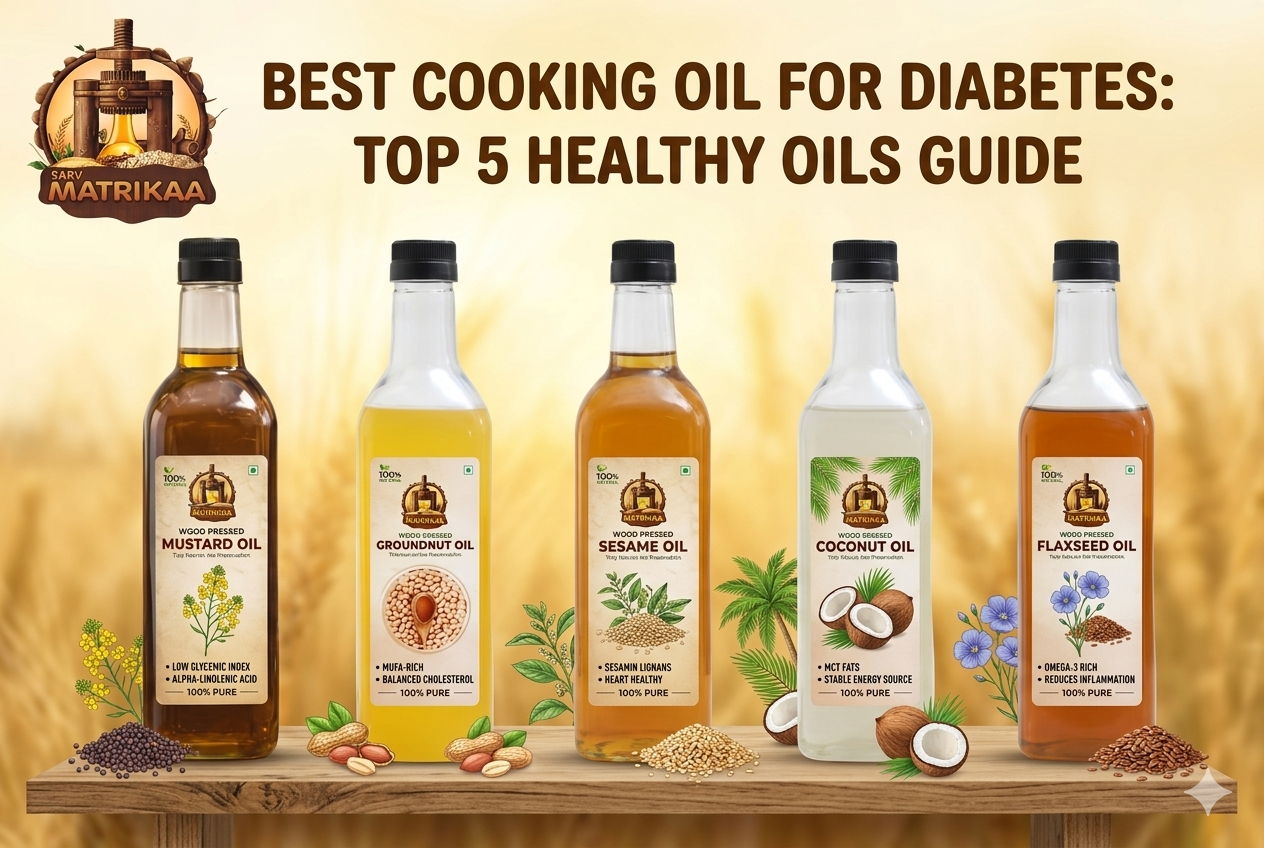
Best Cooking Oil for Diabetes: Top 5 Healthy Oils Guide
Reducing your diet of sweets and rice is not the only way to control blood sugar. Most people don’t know how much of an impact the oil on your kitchen shelf has. Knowing which is the best cooking oil for diabetes can make a genuine, everyday difference, whether you are cooking for yourself, a parent with the disease, or simply trying to eat healthier. This manual talks you through everything in an easy-to-understand manner without feeling like a medical textbook.
Why Your Cooking Oil Affects Blood Sugar More Than You Think
It makes sense that the majority of diabetics are cautious about sugar in addition to carbohydrates. But the oil you cook on has an indirect influence on your health which may not be apparent. A slow build up of bad fats that make insulin resistance worse, and inflammation, and further burden your heart, go on in your body when you cook with the wrong kind of oil on a regular basis. It is a big problem for diabetics.
Here’s something worth knowing: people living with diabetes already carry a higher risk of heart disease compared to the general population. That means finding the best cooking oil for heart and diabetes together is not a luxury, it’s something your body genuinely needs. The encouraging part is that the oils that protect your heart tend to be the very same ones that help your blood sugar behave better too.
The correct cooking oil can be very helpful in reducing inflammation, maintaining a healthy cholesterol level, slow down glucose uptake and even maintain better cellular responses to insulin. None of this happens in one night, but in weeks and months of daily decisions, the difference becomes a reality, which is observable.
What Makes an Oil Truly Good for a Diabetes Patient?
Some of the oil may not tick all these boxes but being aware of what to look at can assist you in making more knowledgeable decisions.
- The type of fat matters most. When it comes to treating diabetes, oils high in omega-3 fatty acids and monounsaturated fats are your best allies. Unlike saturated or trans fats, they promote insulin sensitivity, control bad cholesterol, and prevent inflammation.
- The omega-3 to omega-6 balance is important. Omega-6 fatty acids are overabundant in many contemporary refined oils. Consistently consuming too much omega-6 causes low-grade inflammation, which is just unaffordable for a diabetic body. The fatty acid profile of an excellent oil for diabetes is better and more balanced.
- Minimal processing makes a real difference. Cold pressed and wood-pressed oils retain their natural vitamins, antioxidants, and plant compounds. These are things that refined oils lose almost entirely during industrial processing. For a diabetic, those antioxidants matter they help fight oxidative stress, which is consistently elevated in people managing blood sugar conditions.
- Smoke point matters for how you cook. An oil that breaks down at high heat releases harmful compounds called free radicals. Matching the oil to your cooking method is just as important as choosing the right oil in the first place.
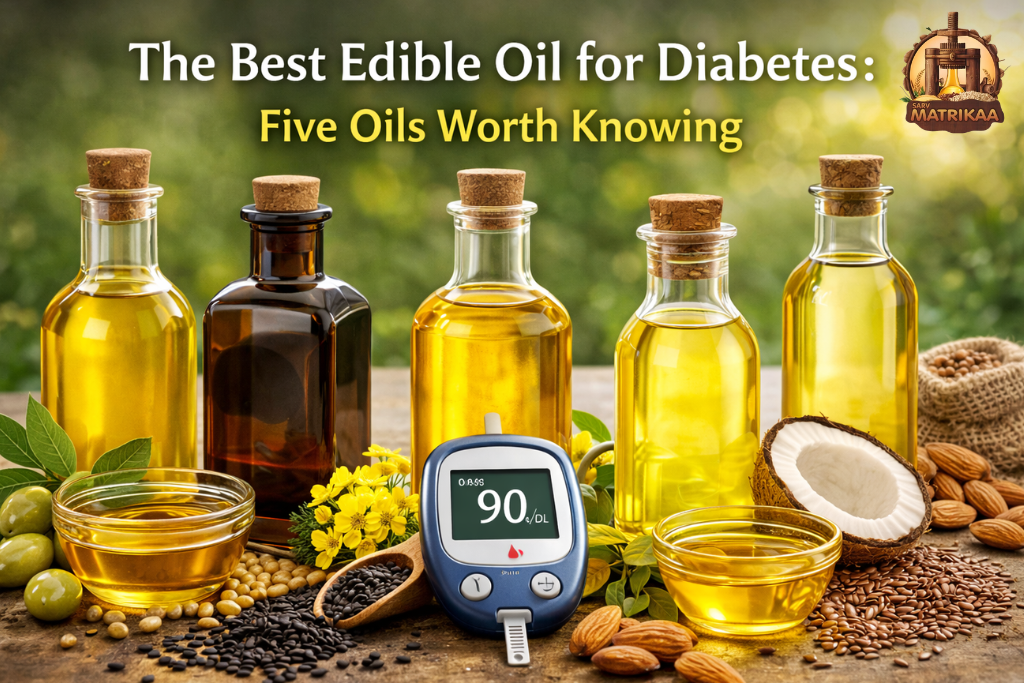
The Best Edible Oil for Diabetes: Five Oils Worth Knowing
The Best Edible Oil for Diabetes Five Oils Worth Knowing
- Cold Pressed Mustard Oil: Excellent for regular cooking, it has a high smoke point and is rich in monounsaturated along with polyunsaturated fats. Compared to most refined oils, wood-pressed oils have a better omega-3 to omega-6 ratio in addition to retaining all of their natural anti-inflammatory qualities.
- Cold Pressed Groundnut Oil: High in monounsaturated fats and resveratrol, which improves insulin sensitivity. It handles heat well, making it practical for daily frying as well as sautéing, always select cold-pressed over refined.
- Cold Pressed Sesame Oil: Contains antioxidants sesamin and sesamol that reduce inflammation, protect blood vessels, support liver health, and may help lower blood glucose levels with regular use
- Virgin Coconut Oil: Use in small amounts only. Its medium-chain triglycerides provide quick energy without spiking blood sugar, suitable for low-to-medium heat cooking
- Cold Pressed Flaxseed Oil: Exceptionally rich in omega-3 fatty acids. Never heat it use as a finishing drizzle over cooked food to protect its nutrients fully
4. Oils That a Diabetic Should Seriously Avoid
Knowing what not to use is just as important as knowing what to choose. Some oils are so widely marketed as healthy that people with diabetes genuinely don’t realise the quiet damage they may be doing over time.
- Refined vegetable oils: soybean, corn, refined sunflower are among the most common oils in Indian kitchens. They are also some of the most problematic for diabetics. They are heavily processed, and stripped of nutrients, along with being extremely high in omega-6 fats. Regular use of these oils is one of the quietest drivers of the kind of low-grade inflammation that makes diabetes harder to manage day to day.
- Vanaspati and partially hydrogenated oil: are still used in many households and packaged foods. These contain trans fats that directly worsen insulin resistance and raise bad cholesterol. There is really no safe amount of these for a diabetes patient.
- Refined palm oil: appears in large quantities in packaged snacks, biscuits, and ready-to-eat foods. It lacks beneficial compounds and, in its refined form, does your blood sugar or heart no favours when consumed regularly.
The broader point is that if an oil has been through industrial refining, it has likely lost most of whatever natural goodness it once had. What’s left behind isn’t doing your body much good, regardless of what the label says.
How Much Oil Should a Diabetic Actually Use Each Day?
Even the best cooking oil for diabetes needs to be used in the right amount. More is not better, even with healthy oils. Most nutrition experts suggest keeping total oil intake to around three to five teaspoons a day, spread across meals.
This doesn’t mean every meal has to taste bland or dry. It means choosing smarter cooking methods. Sautéing, shallow frying, and stir-frying with a small amount of good oil will almost always serve you better than deep-frying, where oil ends up in your food in large amounts and at temperatures that damage even healthy fats.
One practice worth picking up from traditional Indian cooking is rotating your oils. Using mustard oil one week, groundnut oil the next, sesame oil the week after this variety ensures your body gets a range of different fatty acids and nutrients over time. It is something Indian households instinctively did for centuries before uniform branded oils took over the kitchen.
And if you are using a finishing oil like flaxseed, always add it after cooking rather than during. This keeps its fragile omega-3 fats completely intact and delivers them to your body in the most useful form possible.
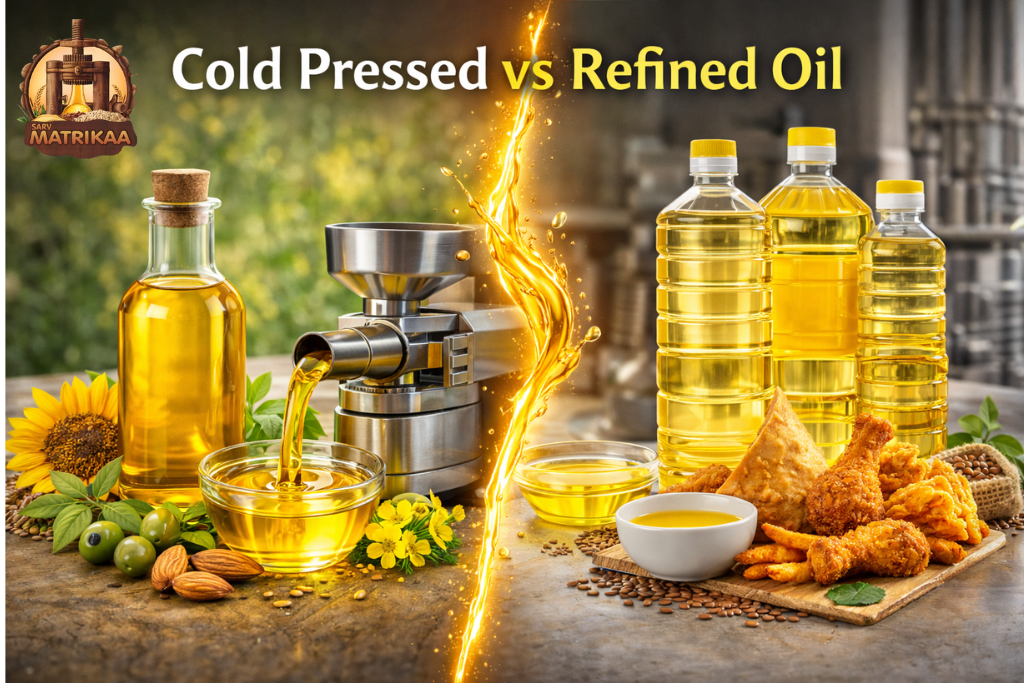
Cold Pressed vs Refined Oil: The Difference That Actually Matters for Diabetics
Cold Pressed vs Refined Oil: What Diabetics Need to Know
- Switching from refined to cold-pressed or wood-pressed oil is one of the most impactful changes a diabetic can make
- Refined oils go through industrial processing high heat, chemicals, bleaching stripping away antioxidants, vitamins, and natural plant compounds
- Cold pressed oil is extracted at room temperature, with no chemicals, keeping all nutrients fully intact
- Traditional wooden Kolhu (kacchi ghani) method preserves the oil’s real colour, smell, taste, and nutritional value
- Cold pressed oils are rich in antioxidants that fight oxidative stress a condition especially harmful for diabetics
- They support better cholesterol levels, lower inflammation, and healthier blood vessel function all critical for long-term diabetes management
Where to Find Truly Pure Cold Pressed Oil: Why Matrika Natural Foods Stands Apart
Finding real cold pressed oil can be hard today. Many bottles say “natural” or “cold-pressed,” but they are made in big factories. Matrika Natural Foods is different. They make oil the old way. Seeds and nuts are pressed slowly in a wooden kolhu. No heat. No chemicals. Just pure oil. This keeps the good smell, taste, and nutrients inside. Matrika also works with many local farmers in India. When you buy a bottle, you help your family’s health and support farmers too. Simple food can keep our hearts strong and bodies happy every single day for growing families everywhere today.
Choose pure oil for your family today. Try Matrika Natural Foods and taste the goodness of real, traditional cold-pressed oil.
Frequently Asked Questions (FAQs)
1. What is the best cooking oil for diabetes?
The best cooking oil for diabetes is cold-pressed mustard oil. It’s full of good fats that keep blood sugar steady and fight swelling. Pick ones like sesame or groundnut too they’re great for everyday cooking without spiking sugar.
2. Why does oil matter for heart and diabetes?
Cooking oils build up bad fats that hurt insulin and your heart. The best cooking oil for heart and diabetes has good fats like omega-3s. They lower swelling, fix cholesterol, and help sugar move right cutting heart risks big time.
3. What oils should a diabetes patient use?
For oil for diabetes patients, go for the best edible oil for diabetes like cold-pressed mustard, groundnut, sesame, a bit of coconut, or flaxseed (no heat). They keep nutrients and balance fats and no junk from factories.
4. What is a good cooking oil for diabetes?
A good cooking oil for diabetes is cold-pressed, not refined. It holds vitamins and smells real. Skip soybean, sunflower, or vanaspati; they add swelling. Use 3-5 tsp a day and rotate for best results.
5. Why pick cold-pressed like Matrika?
Refined oils lose goodness in heat and chemicals. Good oil for diabetes from Matrika Natural Foods uses wooden Kolhu with no heat, pure nutrients. It tastes better, helps sugar control, and supports farmers. Get it for your kitchen!